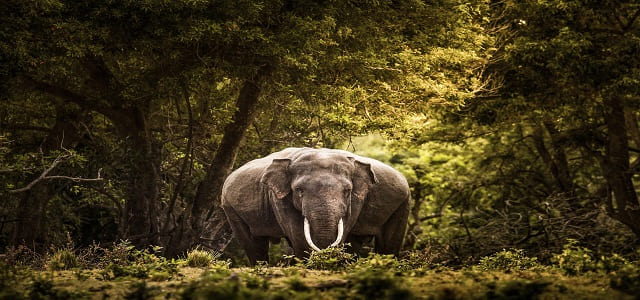
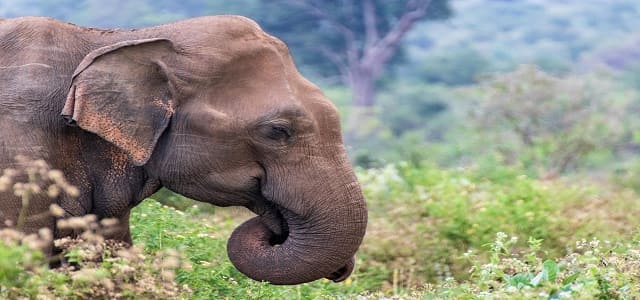
SRI LANKAN ELEPHANT(スリランカの象)
The Sri Lankan elephant (Elephas maximus maximus) is native to Sri Lanka and one of three recognised subspecies of the Asian elephant. It is the type subspecies of the Asian elephant and was first described by Carl Linnaeus under the binomial Elephas maximus in 1758.[1] The Sri Lankan elephant population is now largely restricted to the dry zone in the north, east and southeast of Sri Lanka. Elephants are present in Udawalawe National Park, Yala National Park, Lunugamvehera National Park, Wilpattu National Park and Minneriya National Park but also live outside protected areas. It is estimated that Sri Lanka has the highest density of elephants in Asia. Human-elephant conflict is increasing due to conversion of elephant habitat to settlements and permanent cultivation
Sri Lankan elephant
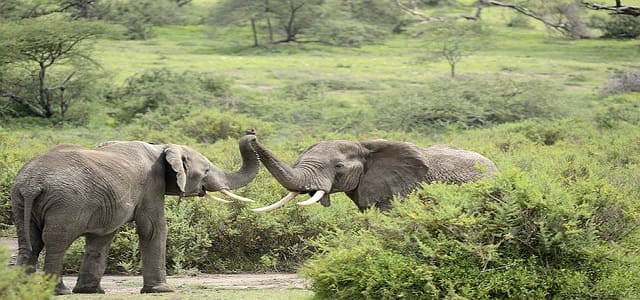
In general, Asian elephants are smaller than African elephants and have the highest body point on the head. The tip of their trunk has one finger-like process. Their back is convex or level. Females are usually smaller than males. 90% of tuskless males are called makhnas.
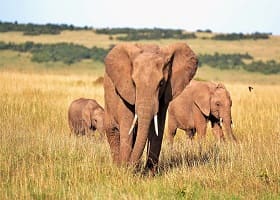
Sri Lankan elephants are restricted mostly to the lowlands in the dry zone where they are still fairly widespread in north, south, east, north-western, north-central and south-eastern Sri Lanka.
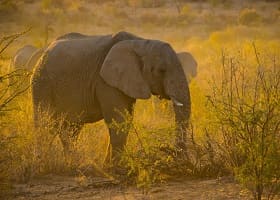
In the historical past, elephants were widely distributed from sea level to the highest mountain ranges. They occurred in the dry zone, in the lowland wet zone as well as in the cold damp montane forests. During the colonial period from 1505 to 1948, the wet zone was converted to commercially used fields and became heavily settled.