What Is Aurora
An aurora is a natural light display in the sky, often called the Northern Lights (Aurora Borealis) or Southern Lights (Aurora Australis). It's caused by charged particles from the sun interacting with Earth's upper atmosphere. These interactions excite atoms and molecules, causing them to emit light in various colors.
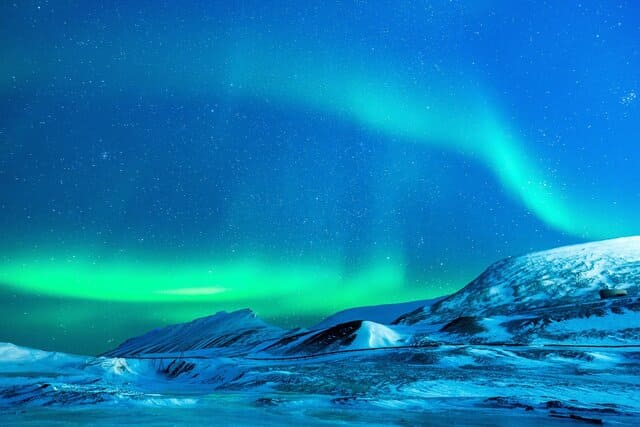
The term aurora borealis has been attributed to two sources: Galileo Galilei in 1619, and Pierre Gassendi in 1621.[6][7][8] The term entered the English language in 1828.[6] The word aurora is derived from the name of the Roman goddess of the dawn, Aurora, who travelled from east to west announcing the coming of the Sun.[6] Aurora was first used in English in the 14th century.[6] The words borealis and australis are derived from the names of the ancient gods of the north wind (Boreas) and the south wind (Auster or australis) in Greco-Roman mythology.[6]
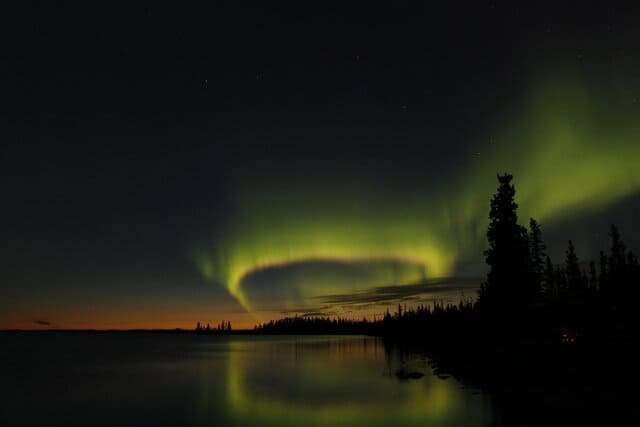
Auroras are most commonly observed in the "auroral zone",[9] a band approximately 6° (~660 km) wide in latitude centered on 67° north and south.[10] The region that currently displays an aurora is called the "auroral oval". The oval is displaced by the solar wind, pushing it about 15° away from the geomagnetic pole (not the geographic pole) in the noon direction and 23° away in the midnight direction
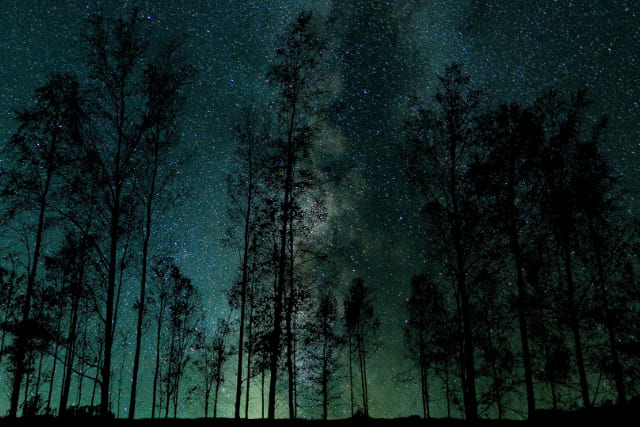
The peak equatorward extent of the oval is displaced slightly from geographic midnight. It is centered about 3–5° nightward of the magnetic pole so that auroral arcs reach furthest toward the equator when the magnetic pole in question is in between the observer and the Sun, which is called magnetic midnight.